
 I hope you’ve taken the time to read part one of this three-part series. In it, we saw that the Bible declares itself, leaving (in my mind) no argument, issue, or need for any updated or modern version. However, there are those who do not wish to take God’s Word at face value. In the second article I lightly trace the path of the manuscripts from which the King James Bible and the modern versions are derived. It reveals that there are not dozens—or even hundreds—of Bibles out there, but two: the King James Bible (the King’s Path) and all the modern versions (the Scholars’ Path).
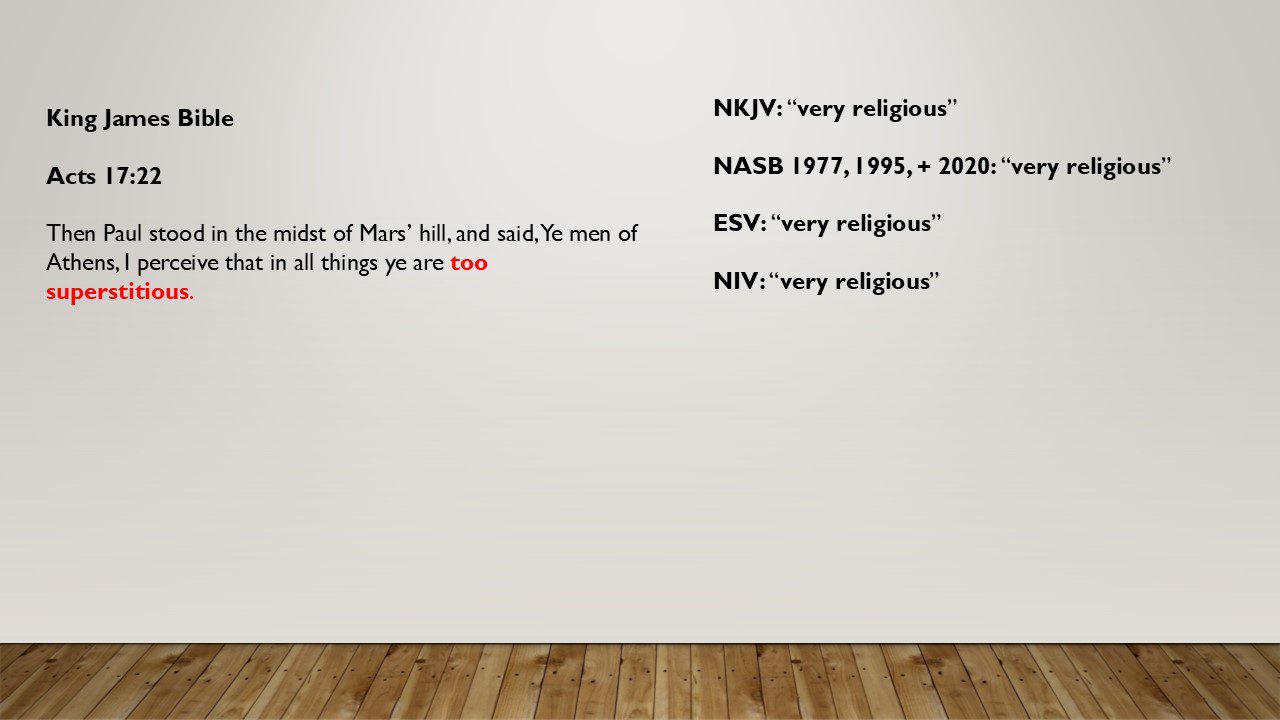
Even so, if you’re reading this article, you may still not be convinced, as I am, that the King James Bible is the only Bible for English-speaking people. In the information that follows, you will see that the claim that modern versions are “easier to read” or “simply remove the thee’s and thou’s” does not hold true. The changes and departures these versions introduce stand in direct contradiction to the King James Bible (the Received Text or Majority Text).
I should also note that across all three articles, I have only scratched the surface of these perspectives. In the first article, I did not list the hundreds of verses in which God declares His truth and His purpose for the purity of His Word to His people. In the second article, I provided only a small sample of the vast historical and manuscript evidence identifying these two major translation lines. Finally, in the information below, we’ll touch on only a fraction of the thousands of changes found in the modern versions.
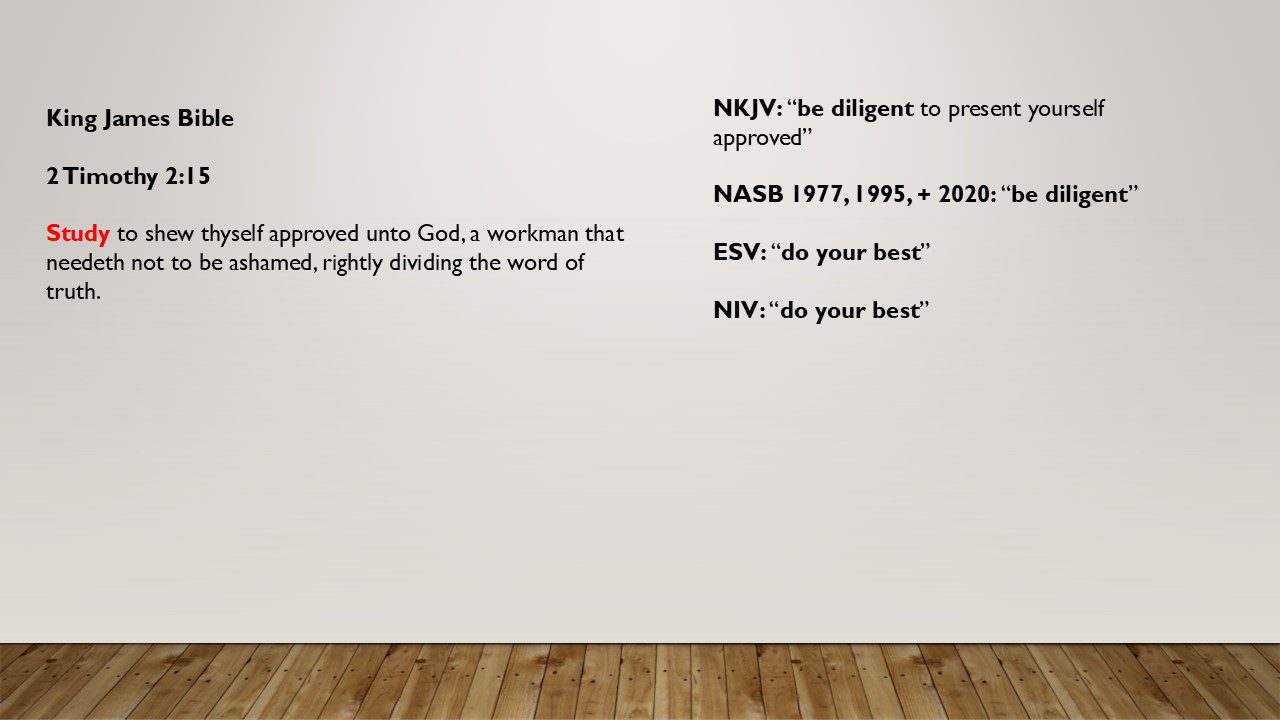
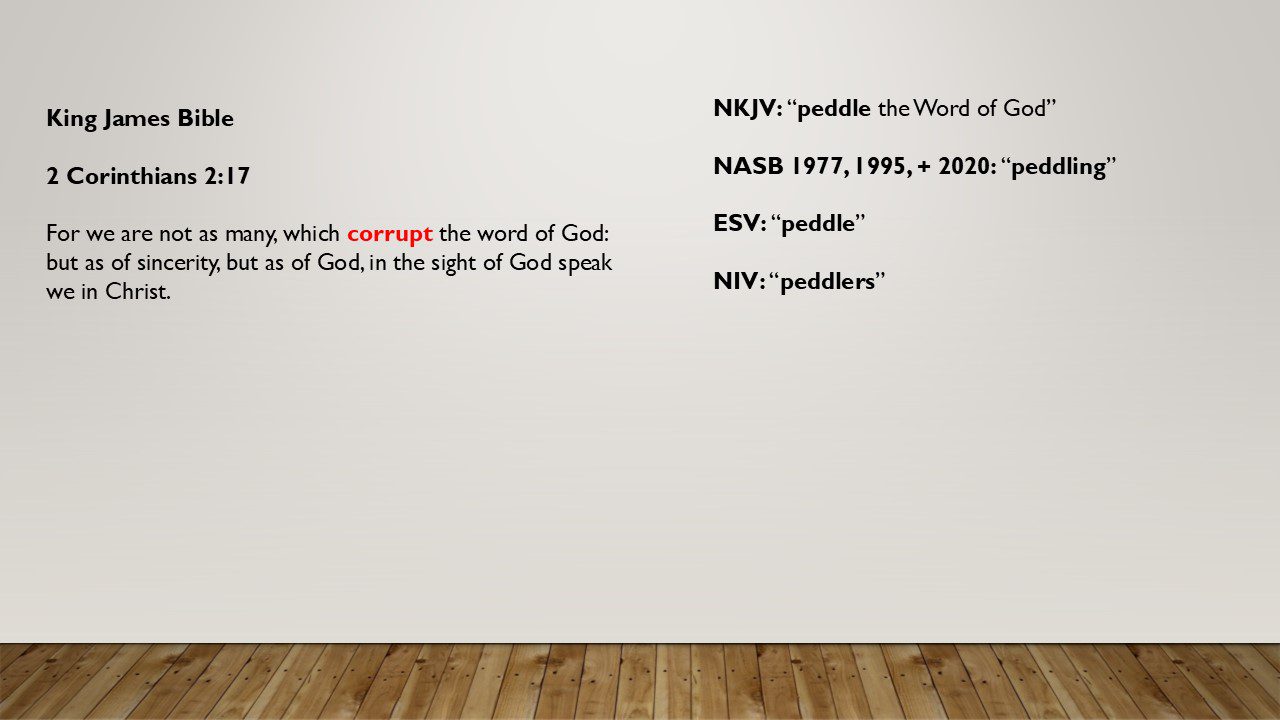
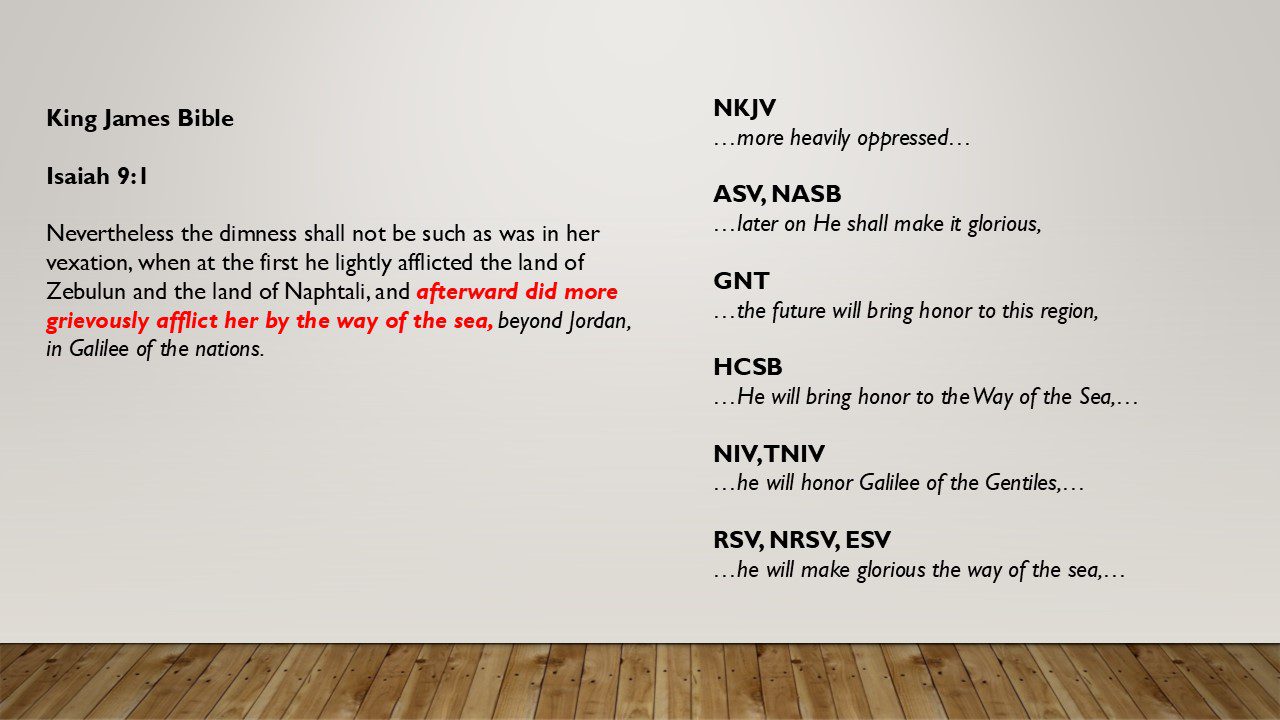
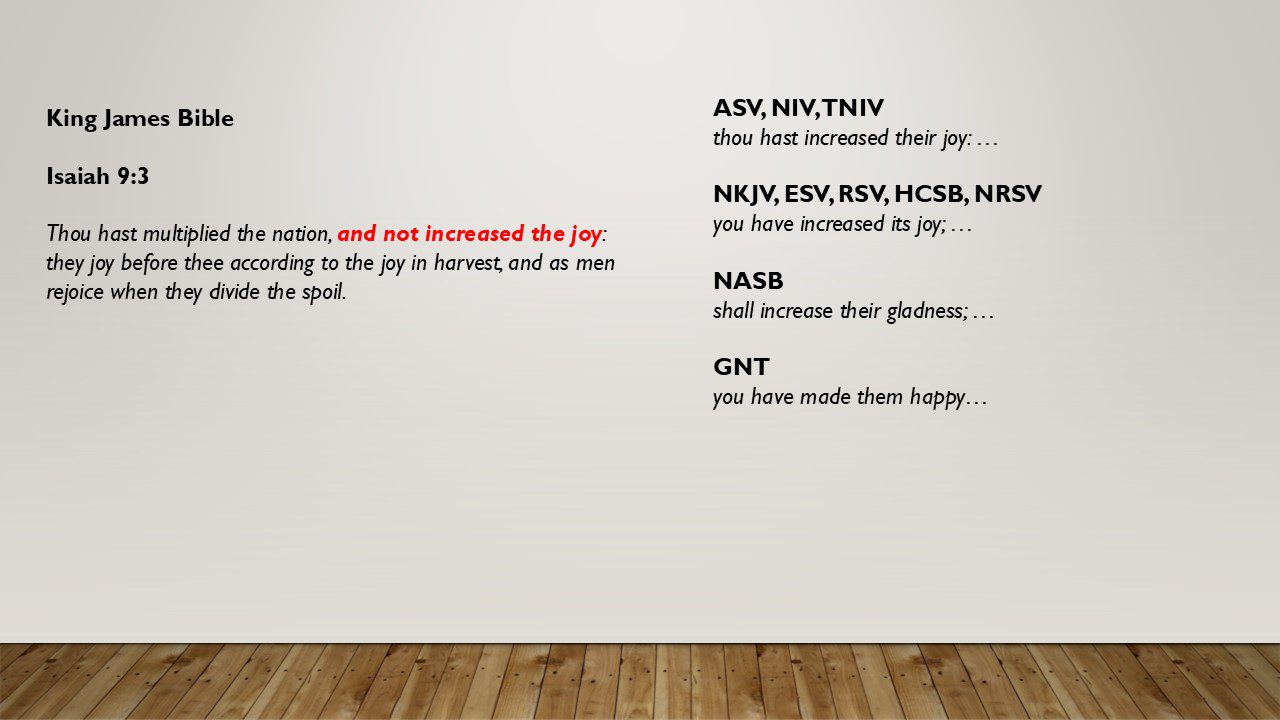
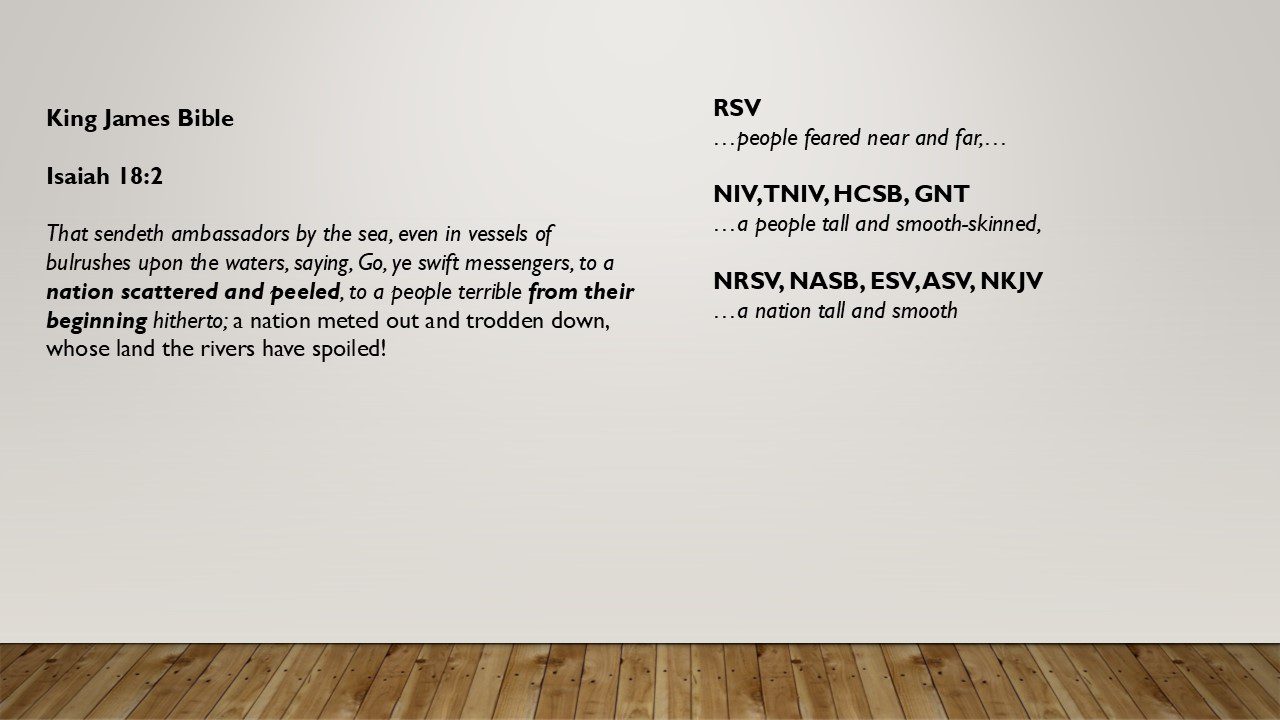
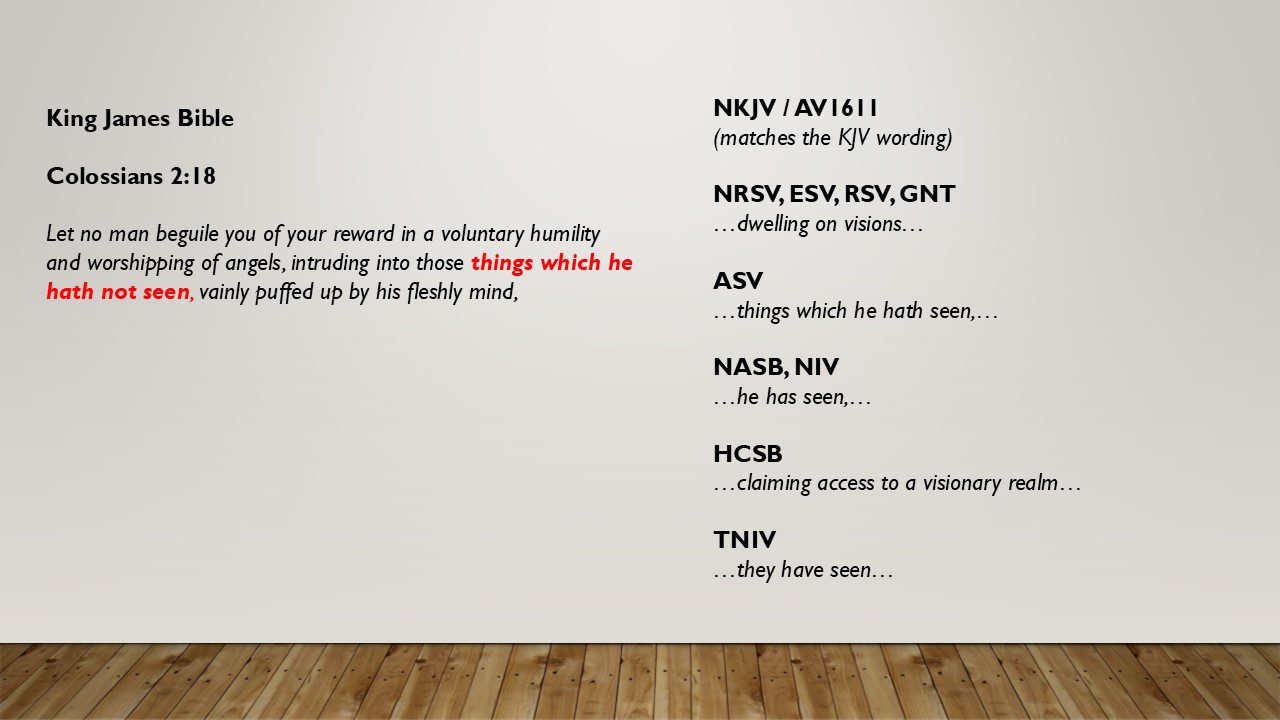
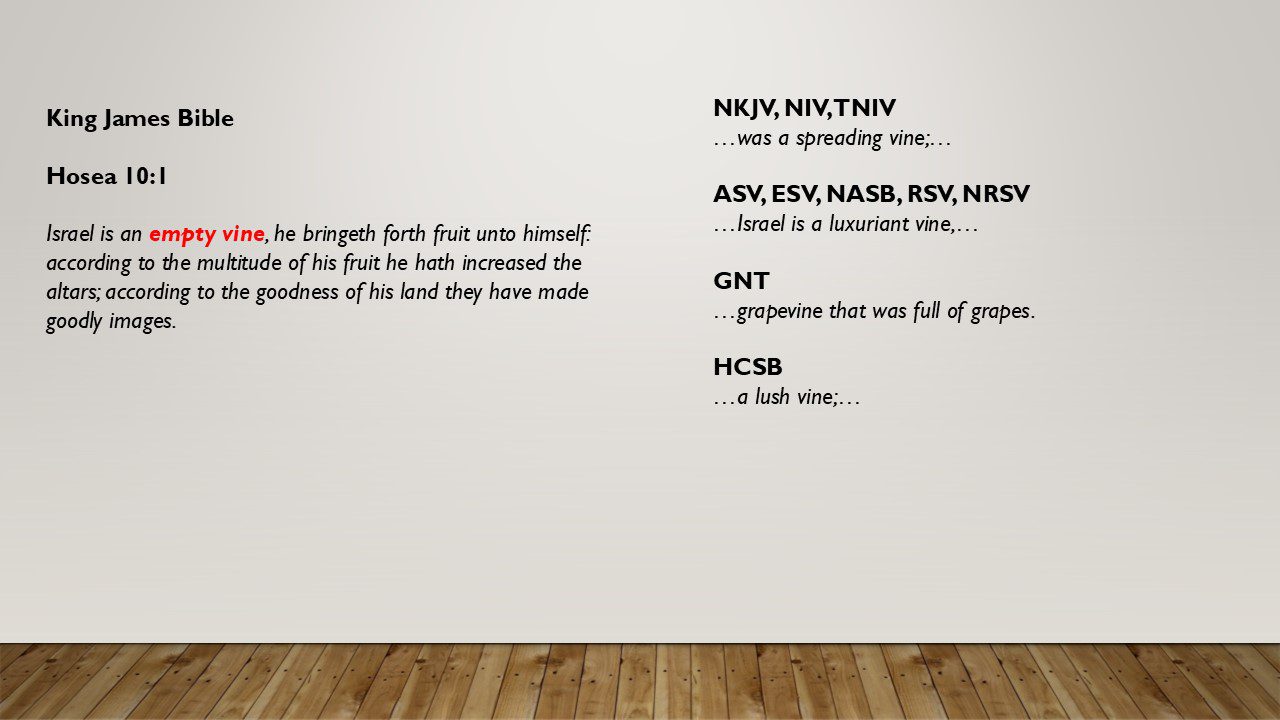
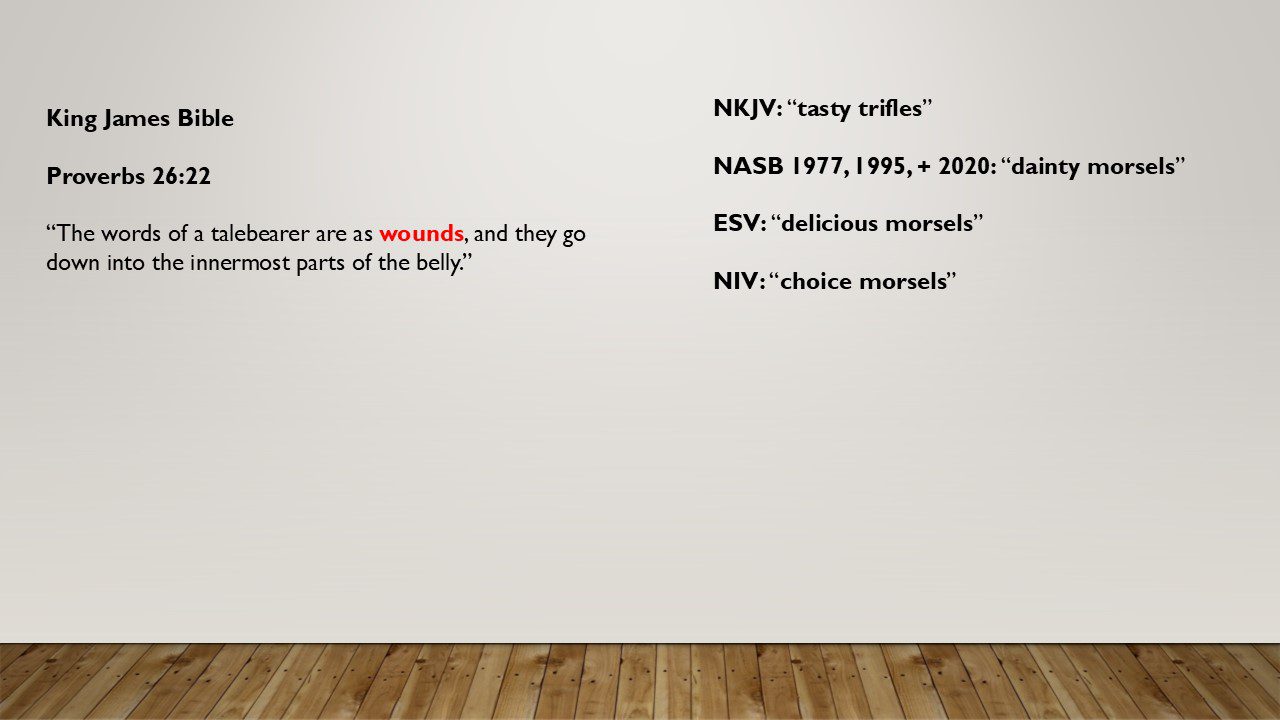
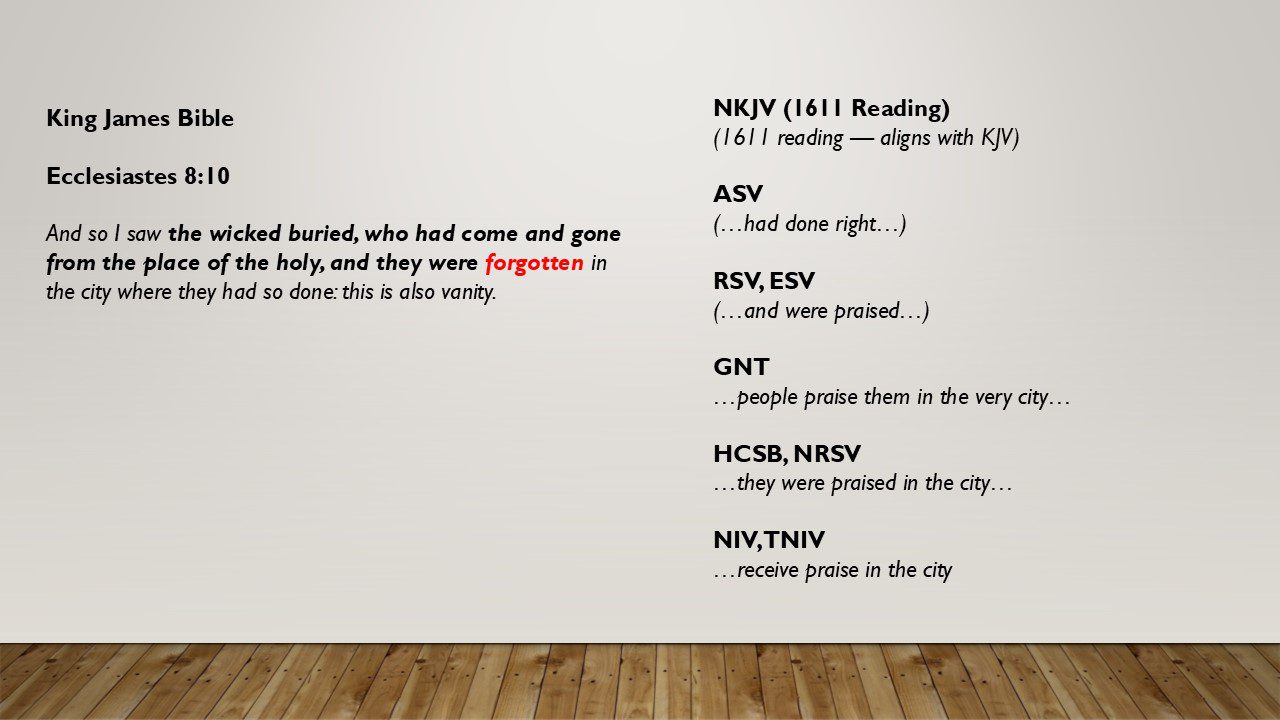
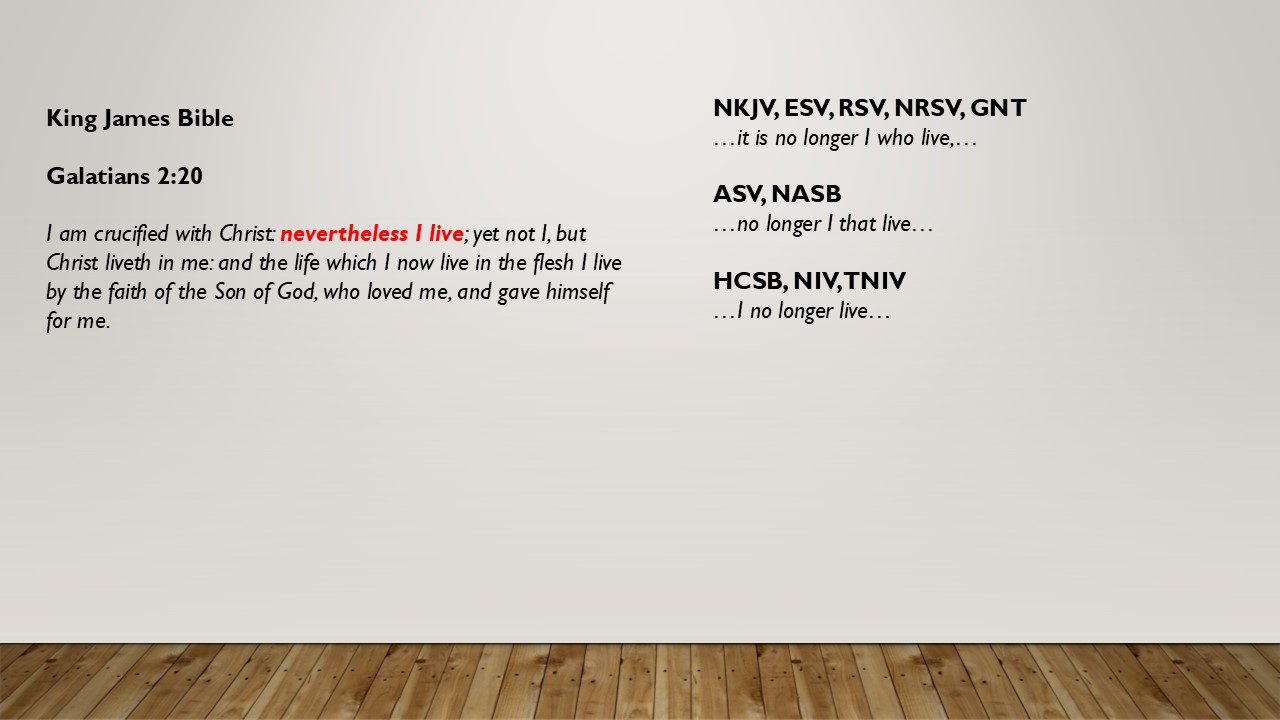


List of Verses Omitted from most Modern Versions:
Matthew 17:21: “Howbeit this kind goeth not out but by prayer and fasting.”
Matthew 18:11: “For the Son of man is come to save that which was lost.”
Matthew 23:14: “Woe unto you, scribes and Pharisees, hypocrites! for ye devour widows’ houses, and for a pretence make long prayer: therefore ye shall receive the greater damnation.”
Mark 7:16: “If any man have ears to hear, let him hear.”
Mark 9:44: “Where their worm dieth not, and the fire is not quenched.”
Mark 9:46: “Where their worm dieth not, and the fire is not quenched.”
Mark 11:26: “But if ye do not forgive, neither will your Father which is in heaven forgive your trespasses.”
Mark 15:28: “And the scripture was fulfilled, which saith, And he was numbered with the transgressors.”
Luke 17:36: “Two men shall be in the field; the one shall be taken, and the other left.”
John 5:4: “For an angel went down at a certain season into the pool, and troubled the water: whosoever then first after the troubling of the water stepped in was made whole of whatsoever disease he had.”
Acts 8:37: “And Philip said, If thou believest with all thine heart, thou mayest. And he answered and said, I believe that Jesus Christ is the Son of God.”
Acts 15:34: “Notwithstanding it pleased Silas to abide there still.”
Acts 24:7: “But the chief captain Lysias came upon us, and with great violence took him away out of our hands,”
Acts 28:29: “And when he had said these words, the Jews departed, and had great reasoning among themselves.”
Romans 16:24: “The grace of our Lord Jesus Christ be with you all. Amen.”
1 John 5:7: “For there are three that bear record in heaven, the Father, the Word, and the Holy Ghost: and these three are one.”
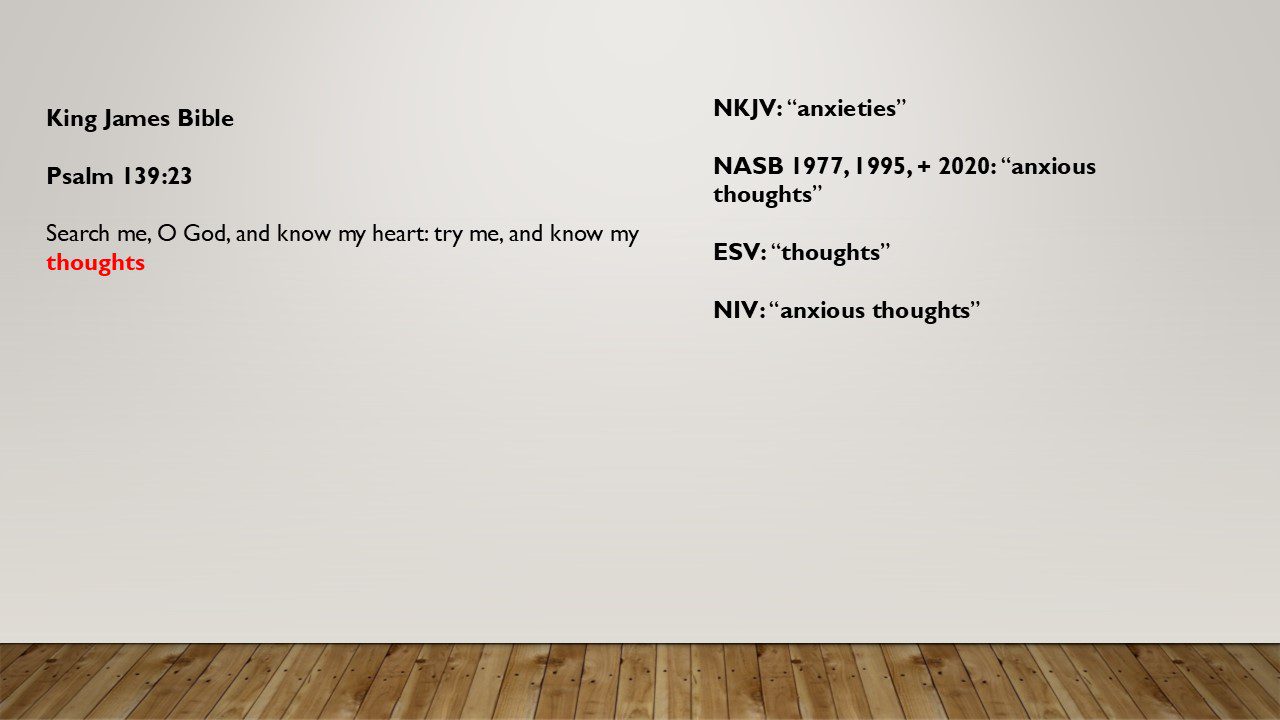
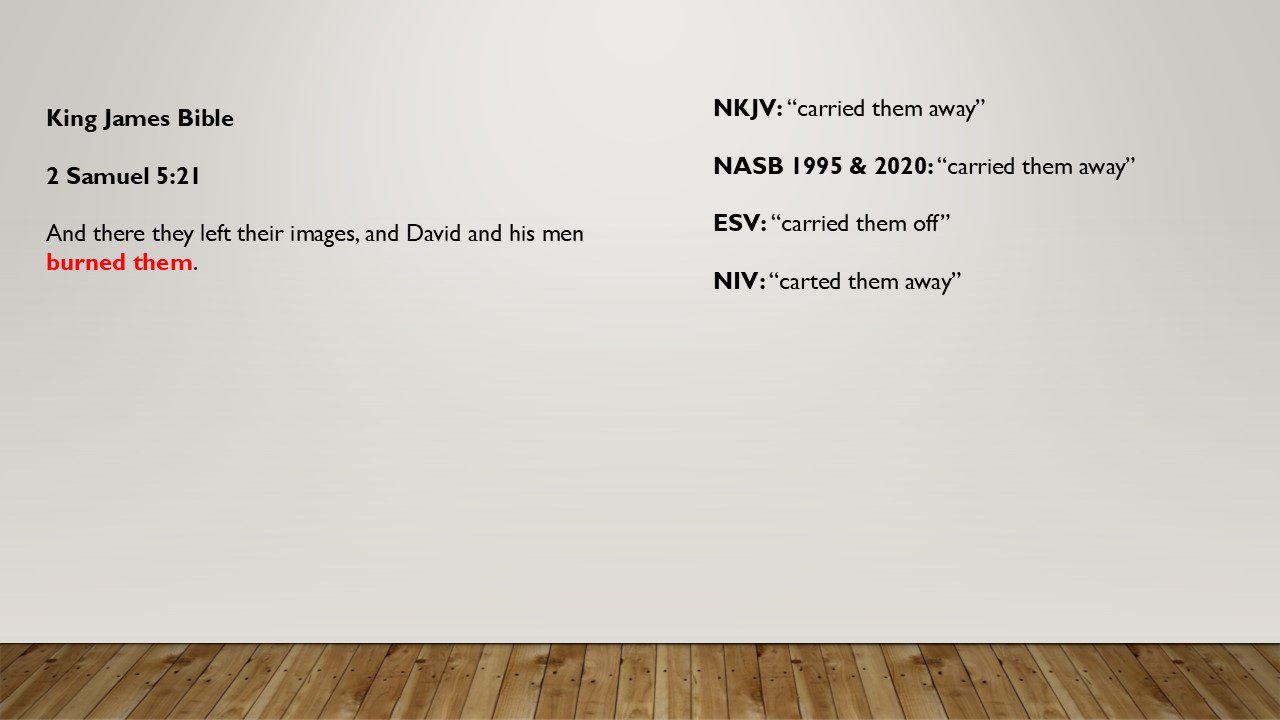
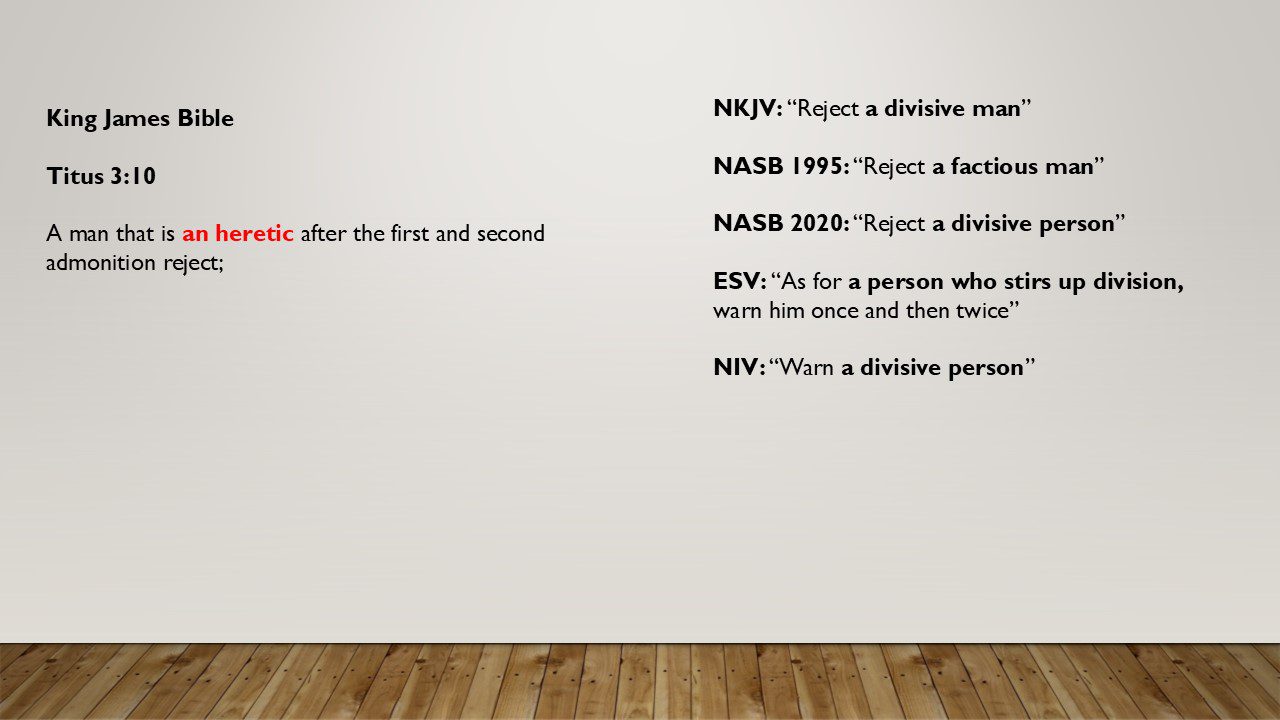
 Modern “Scholars” will say that these verses were omitted because they weren’t in their manuscripts so we were honest and left them out. Really? Is God the author of confusion? If the goal was to translate “the Bible” into modern English, why not just update the language from the King James Bible? If their goal was to bring together ALL the manuscript evidence and simply update the verses; why leave them out? Unless that wasn’t the goal at all? Looking at what was omitted we see verses that speak to the deity of Christ, the Trinity, the rapture, religious heretics, forgiveness, miracles… In fact when you look at it in this perspective, it makes more sense that modern religions that don’t believe in those things; promote or use those modern bibles.
It has been told that Charles Taze Russell, the founder of the the jehovah’s witness cult grew up under the traditional preaching of the Word of God. Hearing that he could go to hell so infuriated him that he sought to have a religion and a bible that removed that teaching. It makes you think about the motives of these other “scholars” when they choose what verses gets used, added or removed from a translation.
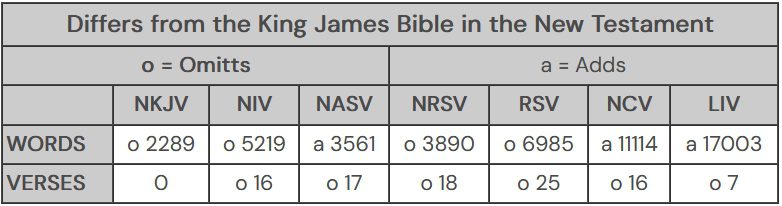
Words and Verses Omitted or Added in Modern Versions
|
The chart seen below helps to get a graphic of just how many changes there were in many of the most popular translations. Ones that are watered down even more like the street bible, the slang bible, the comic book bible… barely have enough scripture in them to be called a bible. |
|
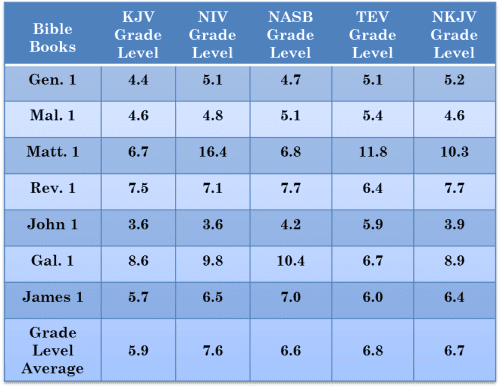
Are the Modern versions easier to understand?As for the unsubstantiated assertion that the modern version are easier to understand, the Flesch-Kincaid Research Company’s Grade Level Indicator shows this to be a fallacy. Their research shows the language of the King James was actually easier to understand in 23 out of 26 comparisons. In their study they compared the first and last chapters of the first and last books of the Bible (Genesis and Revelation), one Gospel (John), one Pauline epistle(Galatians), and one General epistle (James). The result of their research can be seen on the following chart. |
|
2 Sides to Every Story
 When my wife and I visited her hometown, we went to the church she grew up in. The pastor was preaching that day. Now, this particular church made no preference for any one Bible version. During the sermon, the pastor actually stopped mid-message because the version he had written in his notes contradicted the point he was trying to make! (If I’m lyin’, I’m dyin’.)
So, he asked the congregation—who had dozens of different versions—to read aloud from their Bibles until he found one that supported his point. That moment proved to my wife and me that this issue was about more than just finding an “easier-to-read” Bible. He wasn’t preaching the Word; he was deciding what he wanted to say and then searching for a version that fit his narrative.
Later, I asked him about the different versions, and his answer shocked me. This “man of God,” who held a Doctorate in Theology, told me there was no true Word of God—that all versions contained errors and that we needed all of them to “piece together” whatever little truth there was. I couldn’t believe it. Why would anyone build their life and faith on something they believe to be corrupt or untrue?
This also helps explain the rise of many non-denominational churches. If you don’t believe there is one God, one faith, one salvation, and one truth, then it’s easy to make a church where everyone can “believe whatever they want—just show up!”
Let me be clear: these three articles are about why I believe the King James Bible is the Word of God. Those who defend the modern versions have plenty of data to support their arguments, and I’ve listened to many of their presentations. But too often, their discussions turn into name-calling or academic showmanship, flashing Doctorate degrees as if that settles the issue.
This debate kept me from getting saved until I was in my twenties, and it was the first topic I researched on my own after salvation. That’s why I get so frustrated when people simply repeat what “so-and-so” said, or what “Dr. Doodledigger” or “Professor Smellfungus” claim, instead of laying out the Scriptures, noting the differences, praying for the Holy Spirit’s guidance, and forming a personal conviction.
This indifference divides us rather than unites us. God’s desire is that His people be one in Christ, moving in the same direction. Shouldn’t that mean we’re all reading the same Bible—one that is above question and free from error?
Resource information
The issue of a perfect Bible is not simply a mathematical equation or scholastic endeavor. Every Christian must accept that God’s Word is inerrant on the basis of faith, since God demands faith from any man who desires to please Him (Hebrews 11:6). However, the stance that the King James Bible is perfect is not a position of ignorance. It is a well-studied position, with support from both history and scholarship.
A great place to start would be The Answer Book by Sam Gipp, which is available in its entirety for free online. You can also browse his website for a helpful books by a variety of authors.

The following sermons on the King James Bible issue were preached at the 400th Year Anniversary of the KJV Conference in April 2011 at the Hope Baptist Church in Toledo, Ohio.
- The Final Authority – Pastor Rick Sowell – Watch Video
- God’s Preserved Words – Dr. Sam Gipp
- One Books Stands Alone – Dr. Doug Stauffer
- The Power of God’s Word – Dr. Mickey Carter
- King James Stuart – Dr. Sam Gipp
- Inspiration & Preservation – Dr. William Grady
- History of the King James Bible – Stephen Shutt
- Use What God Uses – Dr. Mickey Carter
- Not Getting Caught in the Wrong Battle – Pastor Rick Sowell
- Modern Day Attacks – Dr. Doug Stauffer